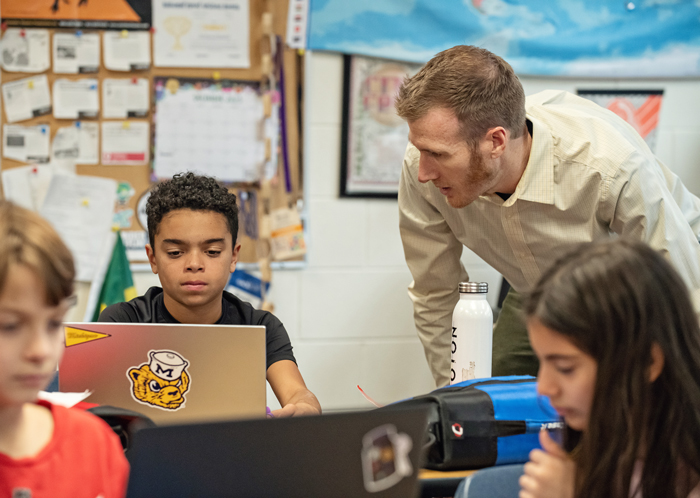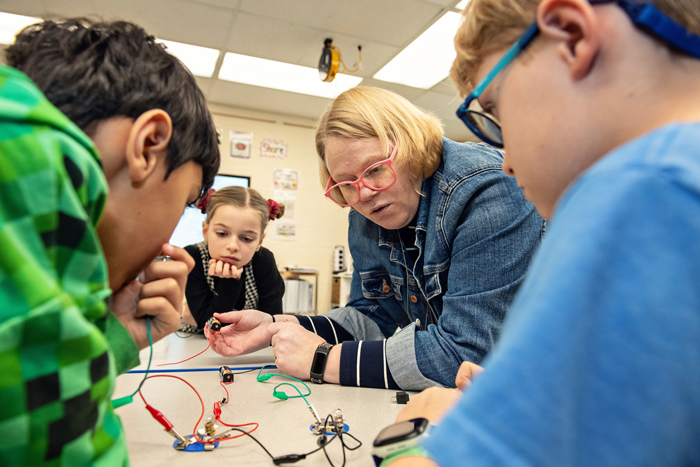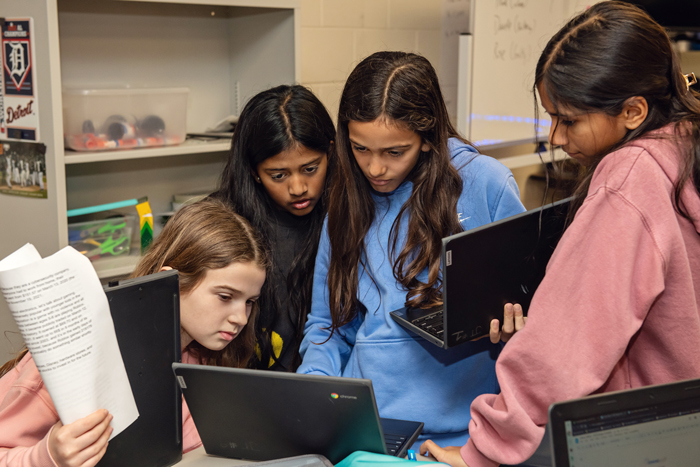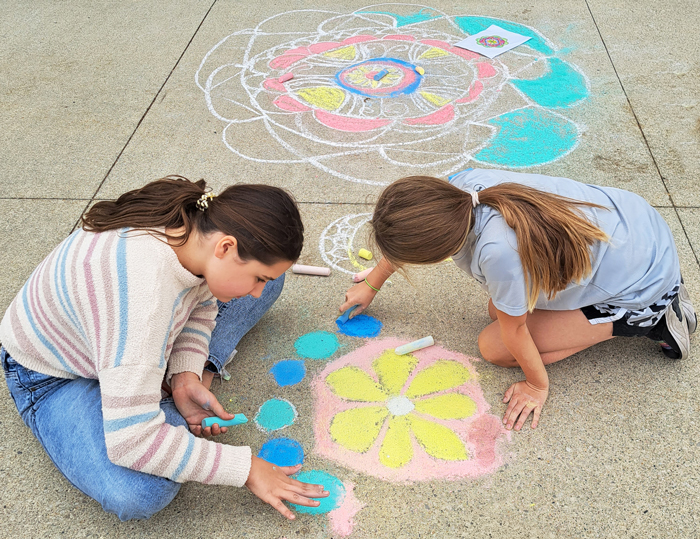

Children learn best in a caring environment in which each child’s unique gifts and talents are celebrated.  People learn with different styles and at different rates.  Teachers work to accommodate individual needs, and to foster positive, realistic self-concepts.  They work to promote self-reliance and self-discipline in students.  In our school, cognitive and creative risk-taking become safe and valued.  Our atmosphere encourages mutual respect.  Children learn by doing, by being listened to, by participating, and by working together.

In working with gifted and academically talented students, Emerson seeks to teach basic skills, encourage higher-level thinking, and to nurture creativity.  We address the needs of the whole child, and recognize the need for children to develop intellectually, artistically, physically, socially, and emotionally.  The school endeavors to instill important values, including respect, responsibility, compassion, and honesty.  In doing so, we promote the importance of contributing to the Emerson School community and the larger communities in which we live.

The term “gifted” describes children who possess one or more unusually heightened abilities: excellent academic aptitude; sophisticated abstract, creative, or divergent thinking; an extensive vocabulary; a penetrating sense of perception, strong powers of observation, and/or a keen sense of humor; distinct emotional sensitivity and/or intensity; extraordinary memory; outstanding talent in music and/or other arts.  The distinctive qualities which gifted students exhibit in some areas may exist in combination with average aptitude or relative weakness in others.  Perhaps not surprisingly, since these students’ gifts place them so far ahead of the “norm” in significant ways, uneven (asynchronous) patterns of development tend to characterize this population, and gifted students tend not to conform to any one stereotype or checklist of traits.

Exceptional in their gifts, gifted students, like all children, may also be affected by learning differences, attention issues, or emotional difficulties which can interfere with self-expression and performance.  These children can be susceptible to heightened levels of anxiety because they are often highly aware both of their gifts and of discrepancies between their strengths and their weaknesses.  They may expect themselves or may be expected by others to achieve perfection.  By providing appropriately challenging curricula, enlightened guidance, and an atmosphere of ongoing caring, support, and encouragement, educational programs can lead gifted children into balanced development, helping them to make maximum use of their potential, to lead happy, engaged, rich lives, and to make significant contributions to society. 

Emerson School provides a sanctuary in which all students, faculty, administrators, and parents are safe, respected, and valued. Emerson School strives to create a diverse learning environment that will best prepare students to thrive in a global, multicultural, and interconnected society.  According to ISACS definitions, diversity reflects “quantifiable differences embodied in age, ethnicity, gender, race, religion, sexual orientation, socio-economic status, and family status,” while multiculturalism is “a quality of life characterized by acceptance and inclusion, and is manifested in the school’s climate, curriculum, and shared common values.”

Emerson School is accredited by ISACS (Independent School Association of the Central States).  Criteria for accreditation include an adherence to a model of decision making that is outlined in Attachment A.  This model outlines how the Board of Trustees, the faculty, parents, and the Head of School work together to assure that an efficient and responsive educational environment is maintained.

The best education occurs in a community in which the student, the teacher, and the parent/guardian work in partnership.  Such partnerships involve trust, mutual respect, and common understanding.  Positive connections between home and school have a direct benefit on every student’s learning.  Even though different perspectives are understandable when educating a student, and while conflicts are sometimes inevitable, communication and cooperation are essential in helping that student succeed.

As a school responsive to the needs of each child, Emerson School is a community that requires the resources and commitment of everyone involved.  The school offers a challenging and creative curriculum, and also strives to understand and appreciate each student and his/her educational needs.  Ongoing communication about how to provide quality education is essential.

The students who attend Emerson School possess a range of gifts and talents.  The Admissions Committee seeks students who would benefit from the kind of education the school offers.  The child who gains the most from Emerson has many of the following attributes:

  • Respectful of self and others
  • Responsible
  • Academically capable
  • Strong character and integrity
  • Actively engaged in learning
  • Self-reliant
  • Self-confident but not arrogant
  • Eager to learn
  • Able to make good judgments
  • Positive contributor to the life of the school
  • Independent, analytical, and reflective thinker
  • Self-motivated
  • Curious
  • Creative
  • Able to manage his/her own time
  • Hard-working
  • Able to make decisions and solve problems
  • Interested in a variety of activities and issues
  • Effective communicator
  • Organized
  • Well-rounded


Professional educators are attracted to Emerson primarily because of their desire to make a positive difference in the lives of children.  The faculty, staff, and administration strive to remain current with educational practices.  The school seeks talented and student-centered individuals who hold themselves to the highest standards.

It is Emerson’s responsibility to determine curriculum, discipline, and general standards and procedures concerning the functioning and direction of the school.  The character of the institution is expressed through many forms, including academics, fine arts, and athletic programs, as well as through community service, health and wellness, and numerous other curricular and extracurricular activities.

The faculty evaluates student progress frequently, and communicates that progress to parents regularly.  Teachers strive to understand the whole child, and offer appropriate support to students needing help or enrichment.  Such support is most successful when the home and the school are in partnership. 

Emerson staff members, no matter what their role, strive to maintain a personable and professional relationship with all of the school’s constituents.  The resulting community is a dynamic and complex one meant to serve the students’ education well.

Parents rightly hold high expectations of Emerson School, just as the school holds itself to high standards.  They are also typically proud of the school and of their child’s successes.  A positive relationship with school strengthens the educational partnership, which strengthens students’ learning.  Parents appreciate the school’s belief that education is a high priority in a family’s life, which can involve sacrifice as well as gain.

Just as teachers, staff, and administrators strive to be professional, Emerson School parents are expected to maintain a good relationship with the school.  They recognize that the more positively they represent Emerson to the community at large, the stronger Emerson becomes for them and their children.  They support their children and the school, knowing that the building and maintaining of a community requires resources of many types.

Parents often serve as volunteers at the school and attend a number of their children’s activities.  They also attend parent-teacher conferences, meet when necessary with faculty and administrators, and participate in a variety of events.   Emerson is a small school, and the role that parents play is valued and appreciated.